Spondylosis
|
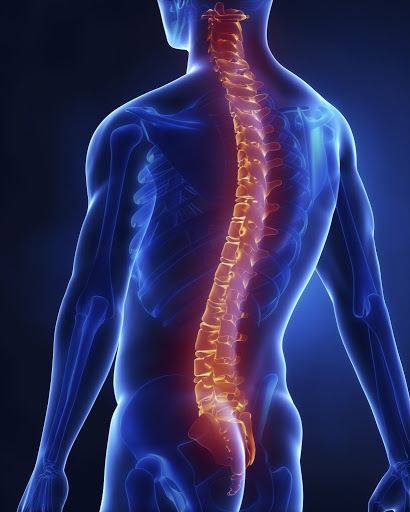
Spondylosis is a general term used to describe age-related and degenerative changes in the spine. It can affect the neck (cervical spine), mid-back (thoracic spine) or lower back (lumbar spine) and may involve the intervertebral discs, facet joints, vertebral bones and supporting structures. With time, discs can lose hydration and height, while the joints and bones may develop arthritic changes or bony overgrowths called osteophytes. These findings are very common as people get older and, importantly, the presence of spondylosis on an X-ray, CT or MRI does not necessarily mean that it is the source of a person's pain. The symptoms of spondylosis vary depending on the part of the spine involved and the structures affected. Some people have no symptoms at all, while others may experience localised neck or back pain, stiffness, reduced spinal movement or discomfort that becomes more noticeable with certain activities. When degenerative changes narrow the spaces through which nerves travel, they can irritate or compress a nerve root, potentially producing radiating pain, tingling, numbness or weakness in an arm or leg. More advanced narrowing of the spinal canal can occasionally affect the spinal cord, particularly in the cervical spine, leading to symptoms such as changes in balance, walking difficulty or weakness. Spondylosis is most commonly associated with normal ageing, although previous spinal injury, repetitive physical loading and other factors may contribute to degenerative changes. It may occur in the cervical spine (cervical spondylosis), lumbar spine (lumbar spondylosis) or at multiple levels. Treatment depends on the individual's symptoms, examination findings and the structures involved, and may include exercise and rehabilitation, activity modification, medications and targeted pain-management treatments. Where there are significant neurological symptoms or suspected nerve or spinal-cord compression, further investigation with imaging such as MRI may be appropriate. Because degenerative findings on scans are common even in people without pain, treatment decisions should be based on the clinical picture rather than the scan alone. |
|