Sciatica and Lumbar Radicular Pain
|
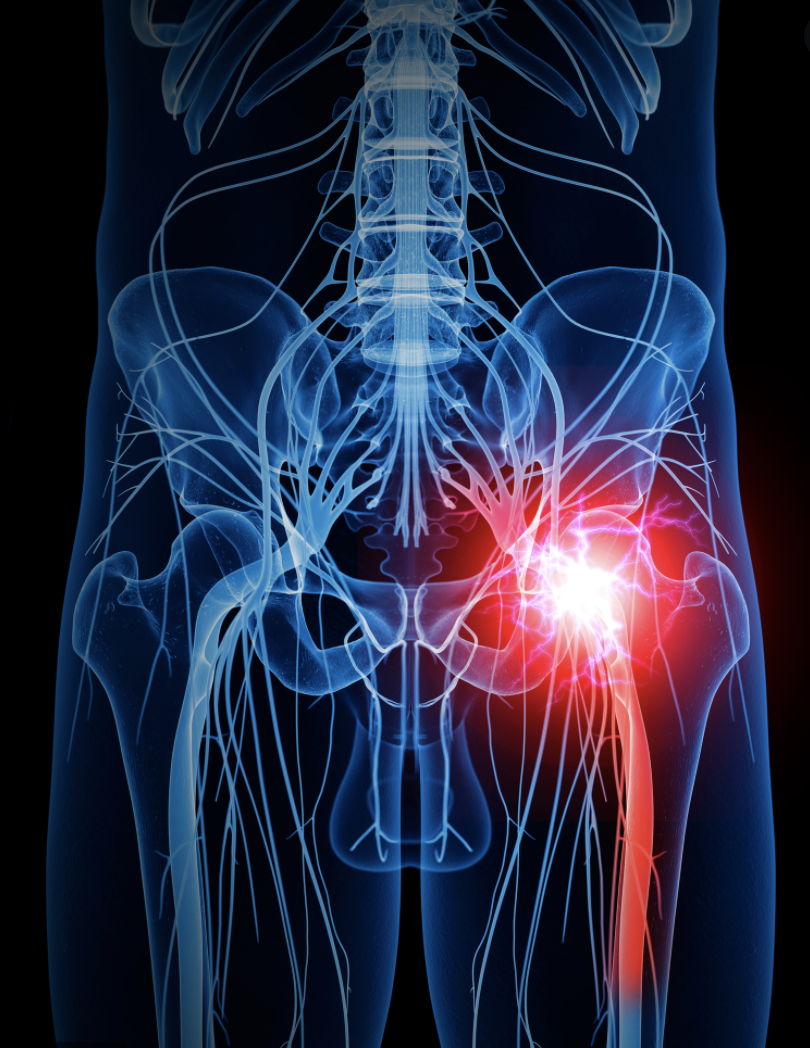
Sciatica refers to pain that travels along the path of the sciatic nerve, typically radiating from the lower back or buttock down the back of the leg, sometimes as far as the foot. It results from irritation or compression of one of the nerve roots that form the sciatic nerve as they exit the spine, most often in the lower lumbar levels. While often triggered by a specific movement or injury, sciatica can also develop gradually, and it is one of the most recognisable and disruptive forms of chronic pain patients present with. The most common causes include disc herniation and degenerative narrowing of the spine, including foraminal or central stenosis. Patients may describe sharp, shooting or electric pain radiating down the leg, sometimes with numbness, tingling or weakness in a nerve-root distribution. Symptoms can be aggravated by coughing, sneezing, sitting or certain spinal movements, although patterns vary. Clinical neurological examination is important, and imaging is used selectively when the findings are likely to influence treatment or when there are red flags or significant neurological deficits. Many cases improve with time, activity and exercise-based rehabilitation, with medication selected according to the individual presentation. In selected patients with acute and severe sciatica, an epidural injection containing local anaesthetic and corticosteroid may provide short-term symptom relief and facilitate rehabilitation; it is not a treatment for every form of chronic spinal pain. Persistent or progressive neurological deficit, significant functional limitation, or symptoms that remain refractory to appropriate non-surgical treatment may warrant specialist spinal surgical assessment. |
|