Sacroiliac Joint Pain
|
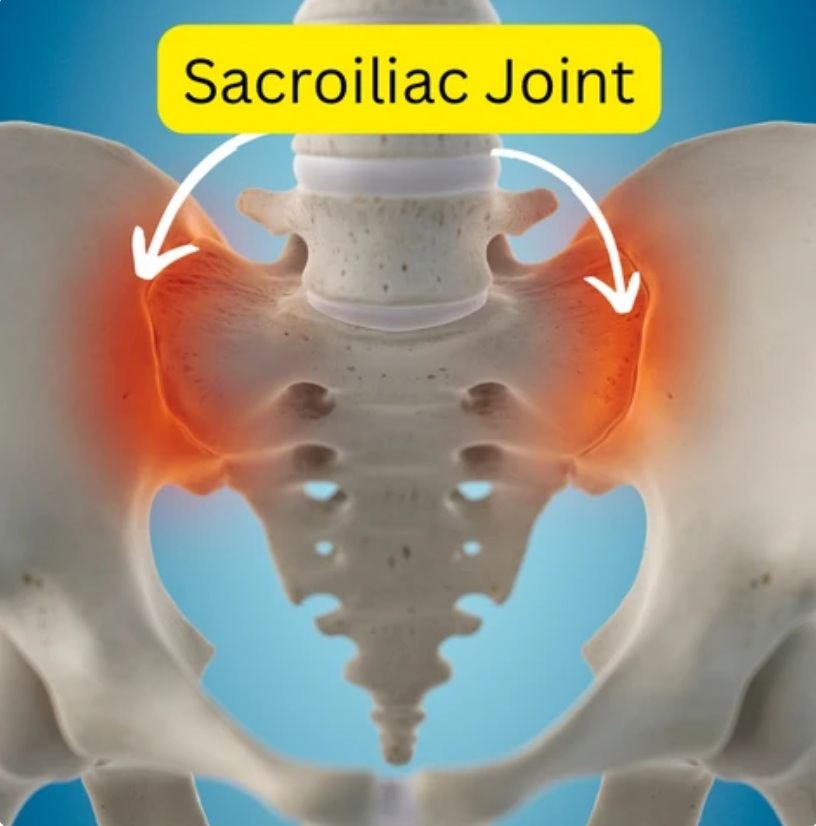
The sacroiliac joints connect the sacrum with the pelvis and can contribute to pain felt in the lower back, buttock and sometimes the groin or leg. Sacroiliac joint pain may occur after pregnancy, trauma or changes in load across the pelvis, and may coexist with lumbar spine or hip disorders. The term 'sacroiliac joint dysfunction' is sometimes used clinically, but pain cannot reliably be attributed to the joint from symptoms or imaging alone. Pain is often felt around the posterior pelvic or buttock region and may be aggravated by activities such as prolonged standing, stair climbing, turning in bed or transitions between sitting and standing. A cluster of provocation tests can increase diagnostic confidence, while an image-guided intra-articular local anaesthetic injection may be used in selected patients when confirmation is important. No single test establishes the sacroiliac joint as the sole pain generator. Treatment usually begins with education, activity modification and targeted physiotherapy addressing strength, movement and load tolerance. In selected patients, image-guided injections may provide temporary relief and can assist diagnostic assessment. Radiofrequency treatment of the lateral branch nerves may be considered for carefully selected patients with persistent pain. Surgical fusion is reserved for a small group with appropriately confirmed, severe and refractory sacroiliac joint pain. |
|